The Situation
For a decade, we ran donkey libraries to reach rural schools in Ethiopia with no library of their own. The animals carried books over terrain no vehicle could manage. For many children, it was their only way to reach a book that wasn’t a textbook.
Then the security situation changed. Unrest made the donkey routes too dangerous to run. Schools that were already under-resourced lost access almost overnight.
Ethiopia’s national curriculum was recently revised. The textbook rollout that followed it fell short. Many schools are now teaching without materials that match what pupils are expected to learn. The mismatch runs across every subject, from reading to mathematics.
We selected fifteen schools for this project, in rural, conflict-affected parts of Oromia and Amhara.
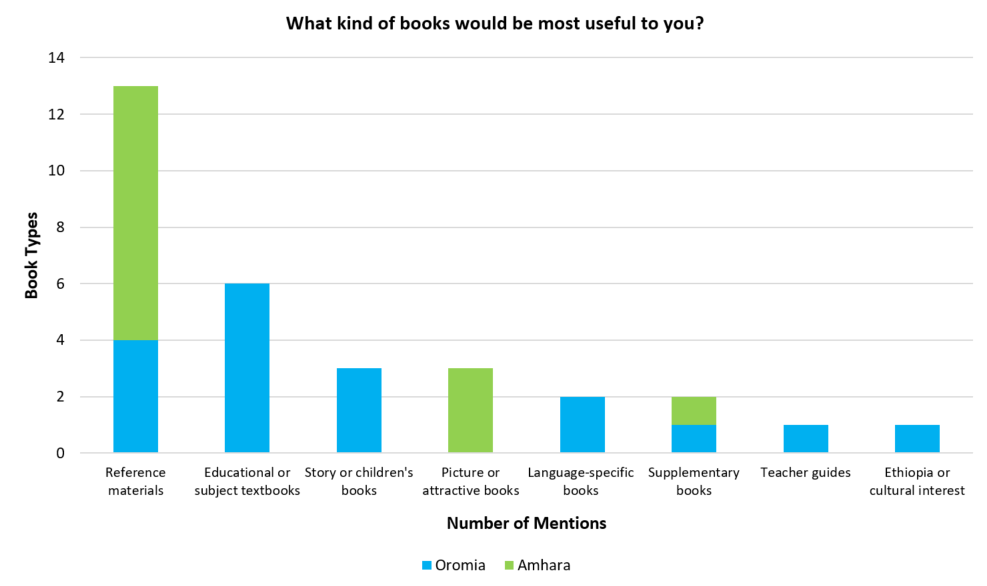
We spoke to 19 teachers about the situation in their classrooms when it came to reading. In Oromia, most teachers reported that students were able to manage 30 to 60 minutes of reading time a week. In Amhara, half the teachers surveyed had no dedicated reading time to report at all.
We asked teachers what would help most. Oromia teachers named a range of materials, from subject textbooks to storybooks in the local language, Afaan Oromo. Amhara teachers asked almost exclusively for reference materials, dictionaries and books pupils could look things up in.
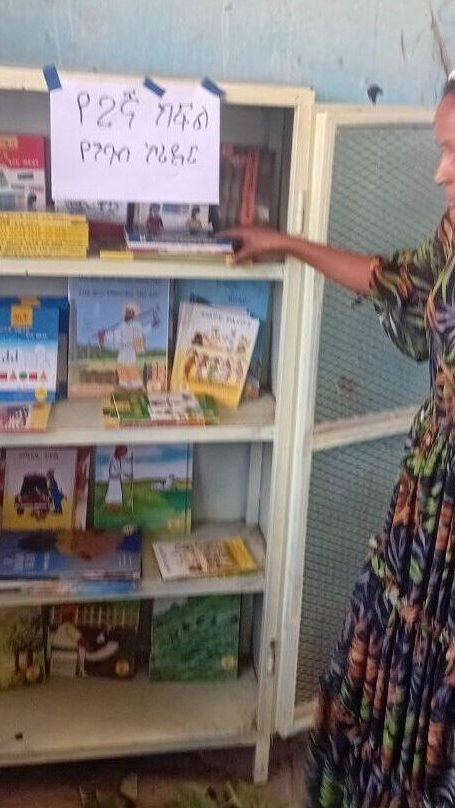
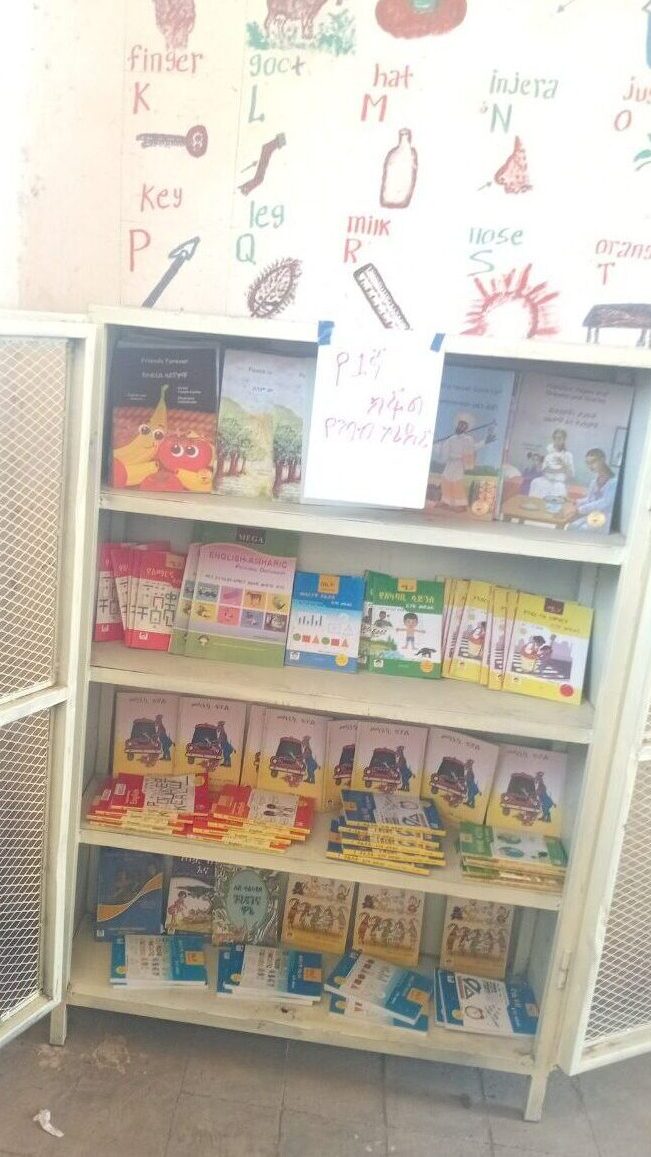
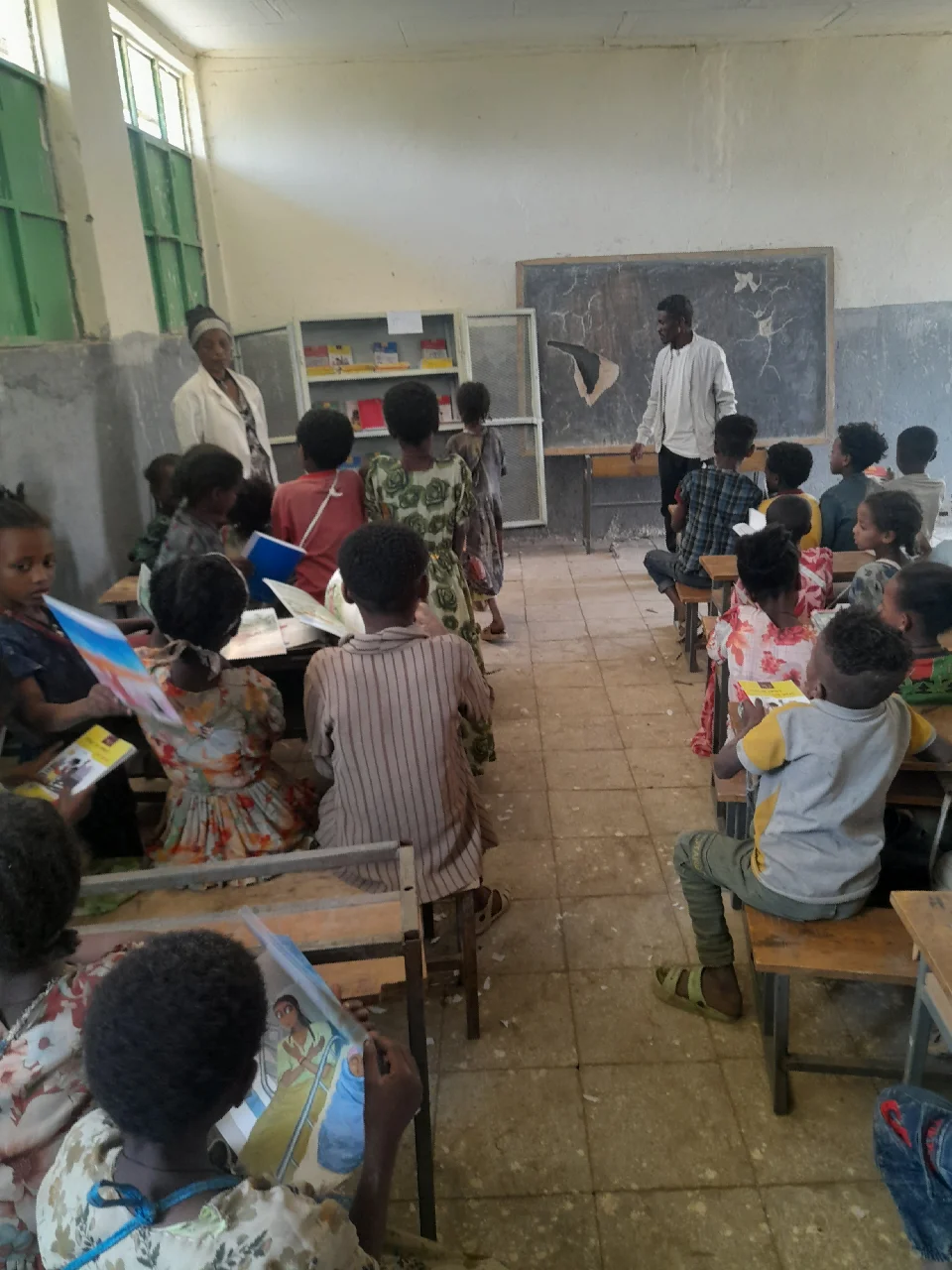
We responded with the corner library. It’s a lockable bookshelf installed inside each school, stocked with subject textbooks and local-language storybooks, and staffed by a trained teacher. The library stays inside the school permanently. It no longer depends on a route staying safe to reach pupils.
What We’ve Done
Each school received the same package to get its corner library started.
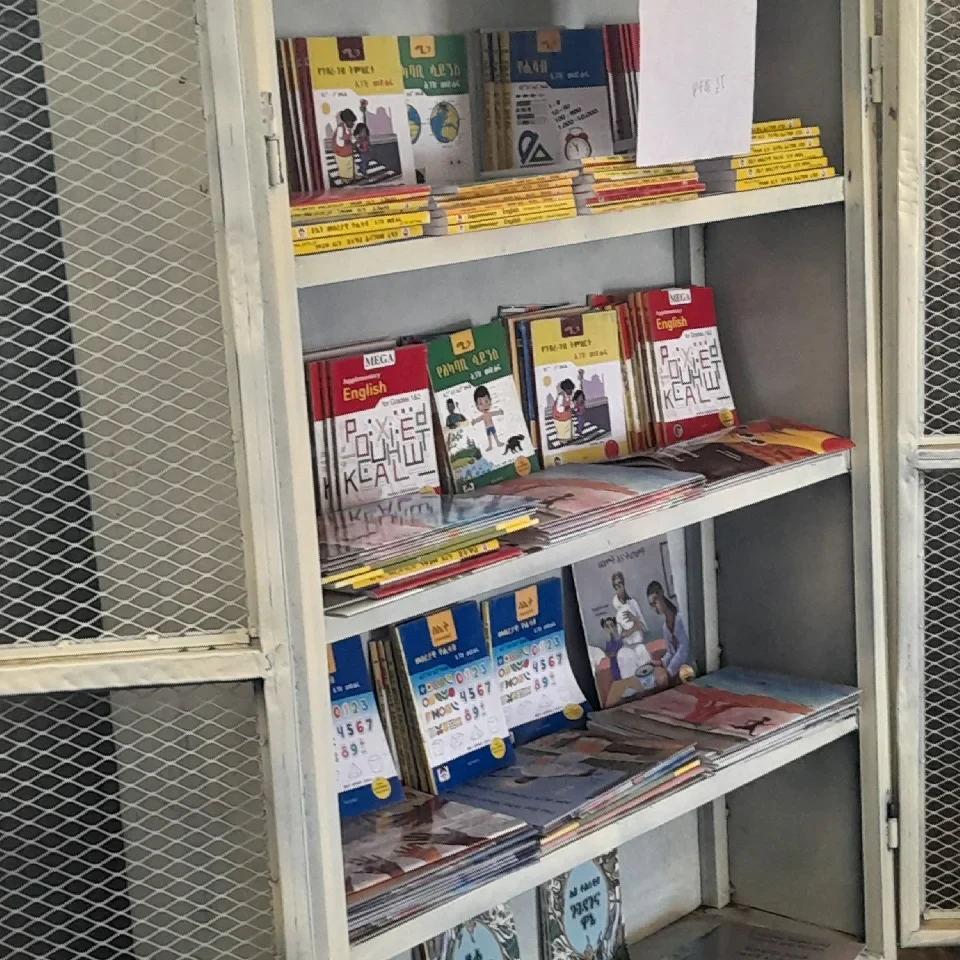
- A shelving unit: Mesh-fronted and lockable, it fits into a corner of an existing classroom and keeps books secure but visible.
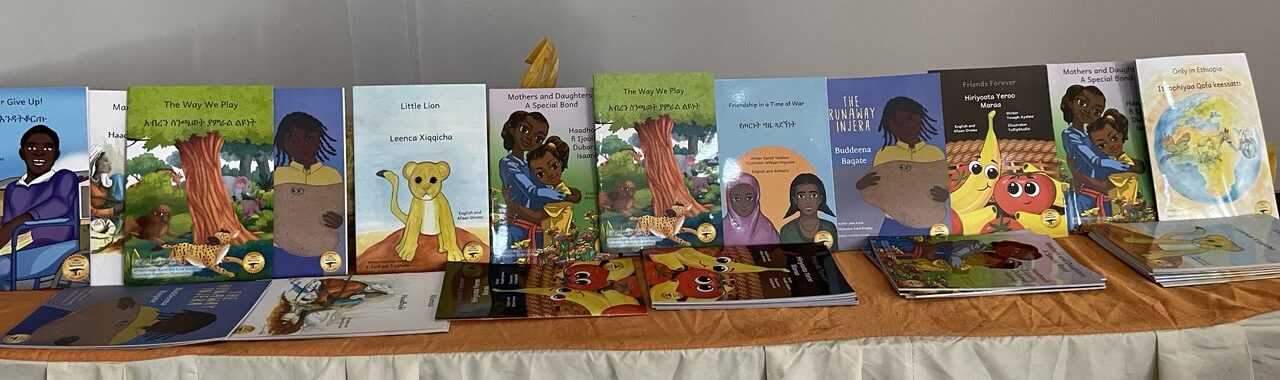
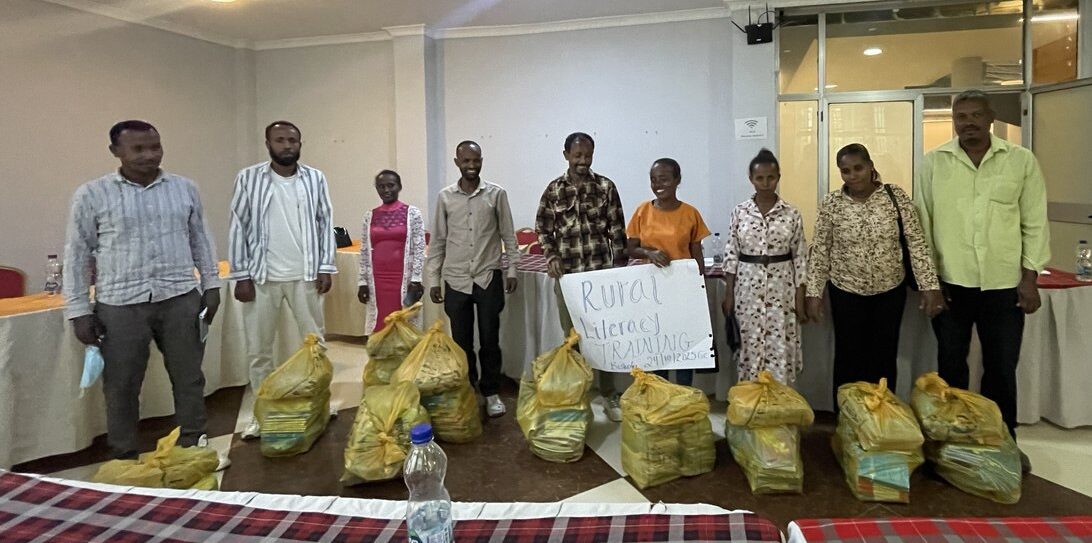
- A full set of storybooks and updated subject textbooks, bundled and delivered to each school individually.
- Training for one coordinator teacher and one school director, giving staff the confidence to run the space from day one
What We’re Seeing So Far
The ten Oromia schools are spread across hard to reach parts of the region, so we monitor progress through phone calls with teachers. Each call checks three things: books on the shelf, books on loan and what happened in that week’s reading session.
349 books are currently out on loan and in pupils’ hands.
433 pupils took part in the reading sessions we’ve logged.
A few things stand out from the calls so far.
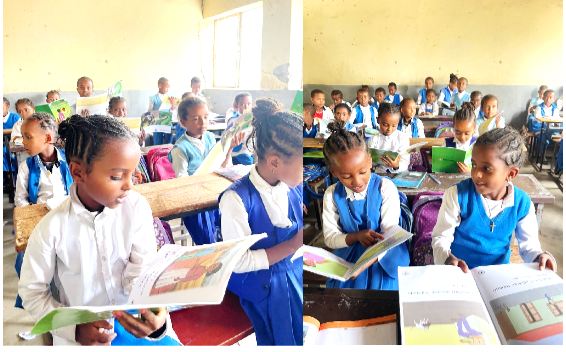
Reading is mostly a group activity. Pupils read together in shared circles from the same books. One school runs paired reading followed by comprehension questions.
Teachers are fitting reading in wherever they can. Delo Elementary fits reading in before class starts. At Kumbursa, it happens during break. Taddacha reads straight after lunch.
The corner library is already being used for more than storybooks. For example, pupils use the Mathematics reference books for group problem solving.
The Road Ahead
We set out to improve literacy for 3,750 pupils across 15 schools. It is our job now to make sure that the corners are working as they should and pupils are getting a chance to read in class and borrow books. With follow-up support, we plan to embed the use of these libraries and monitor closely how many pupils benefit, giving teachers the support they need.
Another key goal we have is raising community awareness. We run sessions with local education officials and communities, raising awareness about the value of reading as a habit that reaches far beyond the classroom. We hope that encourages families to keep children in school.
In September, we’ll return to schools in both Oromia and Amhara to check in on the shelves in person. We want to see with our own eyes how they’re actually being used.
This Christmas, we’re raising funds to bring a library to another rural school facing the same problem, Delo Primary School.